
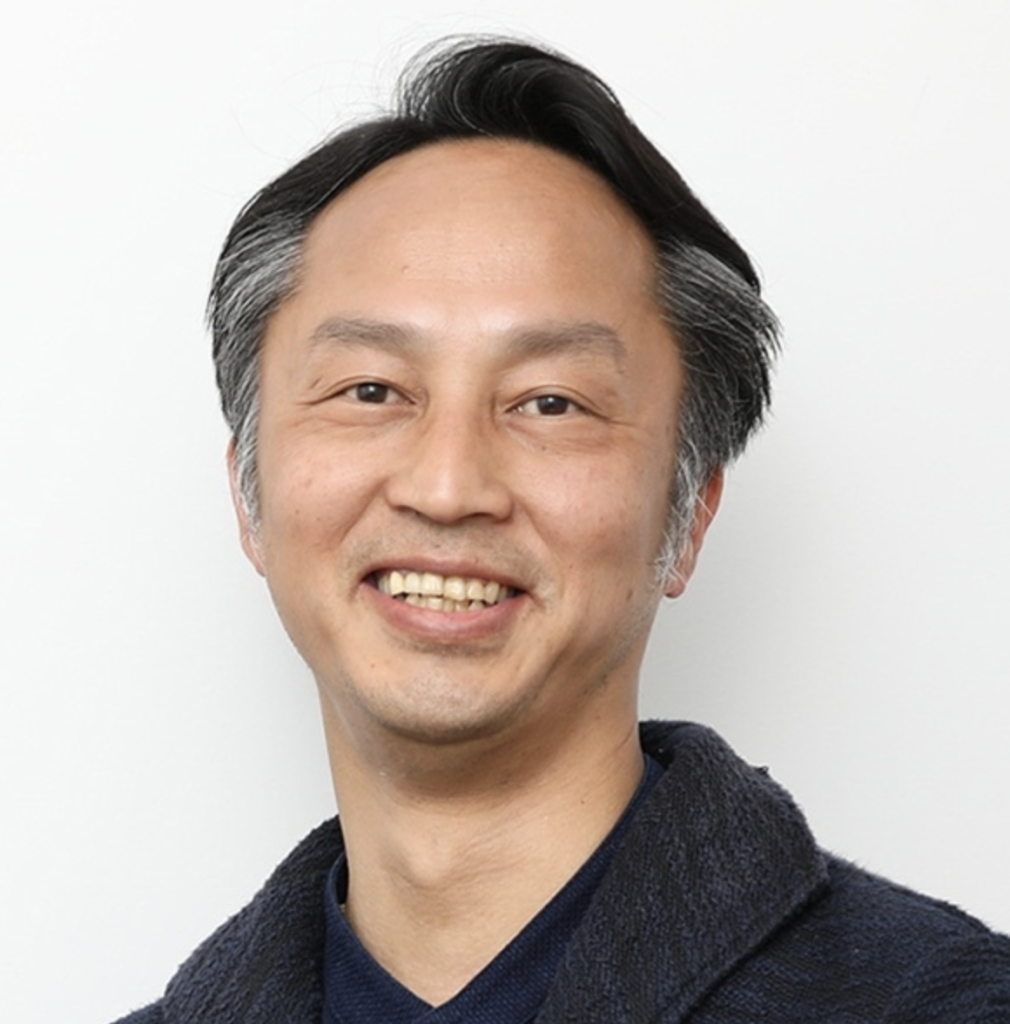
Mikio Shishido founded the Kamakura Mindfulness Lab to bring the spirit of Zen and mindfulness to corporate management, organizational development and human resource development. He also co-founded Zen 2.0, an international forum on Zen and mindfulness, which is held annually at Kenchoji Temple in Kamakura. He is a co-author of Marketing ZEN.
Kamakura is not just a location but a living cultural and spiritual ecosystem—how has this place shaped your understanding of regeneration?
Kamakura is not merely a geographical location. Surrounded by the sea and mountains, it is a place where rich natural environments and centuries of Japanese wisdom—particularly Zen—have been cultivated in deep harmony.
Here, nature, human life, and spirituality have never been truly separate.
They have coexisted as an integrated living system.
At the same time, Kamakura has experienced cycles of rise and decline, disasters, and renewal throughout its history. Because of this, it carries a kind of intelligence that does not seek permanence, but rather embraces transformation.
For me, regeneration is not about returning to a previous state. It is about reconnecting with the flow of life itself.
Being in Kamakura allows me to feel the rhythms of nature, the continuity of history, and the persistence of life even through disruption.
That lived experience has deeply shaped my understanding of regeneration.

In what ways can Zen practice contribute to regenerative systems thinking—beyond sustainability toward true renewal?

Zen cultivates a way of perceiving reality that is not based on separation.
While conventional systems thinking often focuses on structure, Zen works on the quality of relationships that give rise to those systems.
It allows us to return to a state before we divide:
- self and nature
- subject and object
- individual and organization
From this state of awareness, the decisions we make naturally become regenerative.
In that sense, Zen is not simply a philosophy for designing systems.
It is a practice that transforms the consciousness from which all systems emerge.
You work at the intersection of mindfulness and organizations—how can businesses become regenerative rather than extractive?
The key lies in redefining purpose.
Profit itself is not the problem.
However, when profit becomes the sole purpose, systems inevitably become extractive.
This is where mindfulness becomes essential.
As leaders deepen their inner awareness, they begin to recognize: “What do I truly seek as a living being?”
Through this process, the purpose of one’s life and the purpose of the organization are no longer separate.
They begin to resonate with each other.
In this sense, organizational purpose is not something imposed from the outside.
It is something that is discovered from within—and then embodied through action.
This transformation becomes tangible in practice, for example:
- rethinking supply chains
- rebuilding relationships with local communities
- shifting toward long-term value creation
A regenerative business is one that:
- contributes to the well-being of the entire ecosystem it is part of
- prioritizes long-term relationships over short-term optimization
Ultimately, this shift begins when leaders engage deeply with the question of why they live—and allow that answer to shape how their organizations operate in the world.

What does a “regenerative leader” look like through the lens of Zen? What must they unlearn?
From a Zen perspective, a leader is not someone who directs others, but someone who cultivates the conditions in which things can emerge.
A regenerative leader:
- does not seek to control, but to allow
- does not provide answers, but deepens inquiry
- does not chase outcomes, but trusts the process
Equally important is what they must unlearn.
They need to let go of:
- a worldview based on separation
- the assumption that people and nature are merely resources
- an overreliance on short-term performance metrics
What is required is a shift from a fragmented way of knowing to a relational way of knowing.
This shift is at the heart of regenerative leadership.
Kamakura has a deep history of balance between nature, spirituality, and community—what lessons does it offer modern economies?
Kamakura embodies a way of life in which:
- humans live in harmony with nature
- spirituality is integrated into daily life
- communities support one another
Modern economies, in contrast, have often separated these dimensions in the pursuit of efficiency.
What Kamakura teaches us is that the economy itself is part of the living cycle of life. Reintegrating this perspective is essential if we are to move toward truly regenerative systems.
How do you see the role of slowness, silence, and contemplation in rebuilding fractured communities and ecosystems?
Fragmentation often arises from speed and noise. Slowness, silence, and contemplation help us to:
- restore our sensitivity
- reconnect with others and with nature
- create space for deeper dialogue
Regeneration does not begin with building something new.
It begins with recovering our capacity to feel.
Is mindfulness enough—or do we need a deeper transformation of consciousness to address today’s permacrisis?
Mindfulness is an important starting point, but it is not sufficient.
What is required is a deeper transformation of being.
A shift:
- from self-centered awareness to relational awareness
- from separation to resonance
Without this level of transformation, we cannot adequately respond to the structural crises we face today.
How can organizations move from individual mindfulness practices to collective, place-based regeneration?
The key lies in both “place” and “field.”
Individual practices need to be connected to:
- spaces for dialogue
- spaces for co-creation
- spaces for embodied action
At the same time, regeneration must be rooted in place.
Organizations need to engage with:
- local communities
- natural environments
- the unique culture and history of each place
When organizations begin to see themselves not as isolated entities, but as participants in a living ecosystem rooted in place, individual mindfulness naturally evolves into collective regeneration.
What role does ritual, tradition, and embodied practice play in restoring a sense of belonging—to place, to community, and to nature?
Modern society tends to overemphasize intellectual understanding.
However, a sense of belonging arises through the body.
Rituals and traditions:
- connect us across time
- open us to something larger than ourselves
- create embodied memories that stay with us
They are not simply cultural expressions. They are interfaces for regeneration.
If Kamakura were a model for a regenerative society, what principles would define it—and how might they work globally without losing their essence?
Kamakura suggests several key principles:
- Living in harmony with nature
- Integrating spirituality into everyday life
- Networks of small, interconnected communities
- Bridging past and future
To scale these principles globally, we must not attempt to replicate Kamakura itself.
Instead, we need to awaken the “Kamakura-ness” inherent in each place.
This means honoring local uniqueness and allowing regenerative practices to emerge from within each cultural and ecological context.Initiatives like Zen 2.0 are not about exporting a model, but about creating catalysts for this kind of awakening.
Thanks for your time and for what you do!
INTERVIEW by Christian Sarkar